


Binding and Paper
for printing dissertations, final-year projects, and master’s theses
Years of hard work deserve an excellent presentation
Top-quality bookbinding
The content of your work, the result of months and years of research, will undoubtedly be the most important contribution you can make to the examining board. However, the presentation has always been, and always will be, essential. Nowadays, with cooking programmes and chef competitions all the rage, we’re tired of hearing that for a dish to be perfect, it doesn’t just have to taste good – which is undoubtedly the most important thing – It has to appeal to the eye as well. The presentation is an extension of ourselves, and if you present yourself as a mess, people will take you for a mess, even if your thesis has managed to disprove the The Theory of Relativity by Einstein.
We have already outlined the aesthetic aspects of the product you wish to present to the court – its cover, font, margins, line spacing… – but we are still missing the wrapping for the gift: the binding.
First of all, you must ensure that the company responsible for binding your thesis uses a suitable binding method, as the last thing you want is for your work to fall apart in your examiners’ hands.
There are two main types of binding used for printing theses: softcover and hardcover.
BINDING A BACHELOR’S OR MASTER’S THESIS
Softcover thesis bindings, also known as PUR-glued paperback bindings, are the most popular option today, as they are the most economical and the quickest to produce.
Thesis binding hardback, also known as cartoné, These involve covering the front cover, back cover and spine with a rigid cardboard cover, lined with printed paper or imitation leather, approximately 3 millimetres thick. Those who choose this option usually prefer printed paper because it allows them to choose the design and colour.
As for the When choosing paper, the most suitable type will depend on the content of your thesis. However, there are essentially two types of paper used:
– Coated paper: also known as coated paper, It offers excellent image clarity and is ideal for architectural, engineering or art projects, where images play a key role. The recommended thickness is 135 grams, although for thesis bindings with a large number of pages, this can be reduced to avoid the book being too heavy.
– Offset paper: The most commonly used paper for jobs where graphics, tables and the text itself are the main focus. The most suitable thickness is between 90 and 115 grams, depending on the number of pages you are submitting.

Thesis templates
Download the template that is closest to the size you need

Service description
Printing in any format, free print sample…

General information
We’ll be in touch with you throughout the printing process
Binding
Choose the binding style that best suits your needs


FREE DELIVERY
We deliver throughout mainland Spain

TAILOR-MADE QUOTE
If you can’t find what you’re looking for, please contact us

TRY IT OUT WITH NO OBLIGATION
If you are not satisfied, you are not obliged to continue with the process

SECURE PAYMENT
Payment will be made by bank transfer
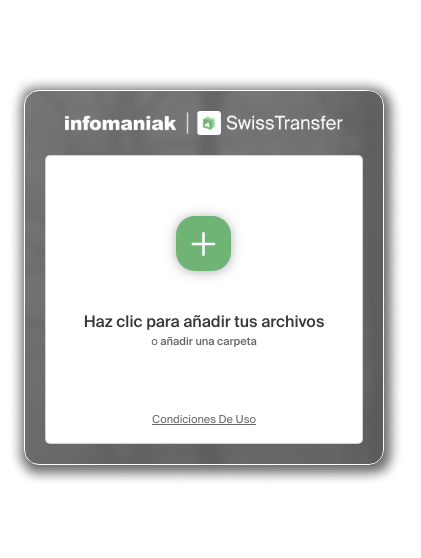
Send your files via SWISSTransfer
Send us your files quickly and easily
How does SwissTransfer work?
If you’re having trouble compressing your files and reducing their size so you can send them by email, SwissTransfer makes it very easy to share them with us. With SwissTransfer, you can send files of up to 50 GB without needing to register on their website, and your transfers will be stored for up to 30 days. Simply go to www.swisstransfer.com, upload your files and share them.